

In today’s world, divorce cases rarely stay confined to paperwork and courtroom testimony. Text threads, Instagram posts, Facebook comments, deleted messages, dating app activity, and screenshots often become central pieces of evidence in family law disputes. In many cases, digital communication leaves a breadcrumb trail that can impact property division, custody decisions, spousal maintenance, and credibility in court.
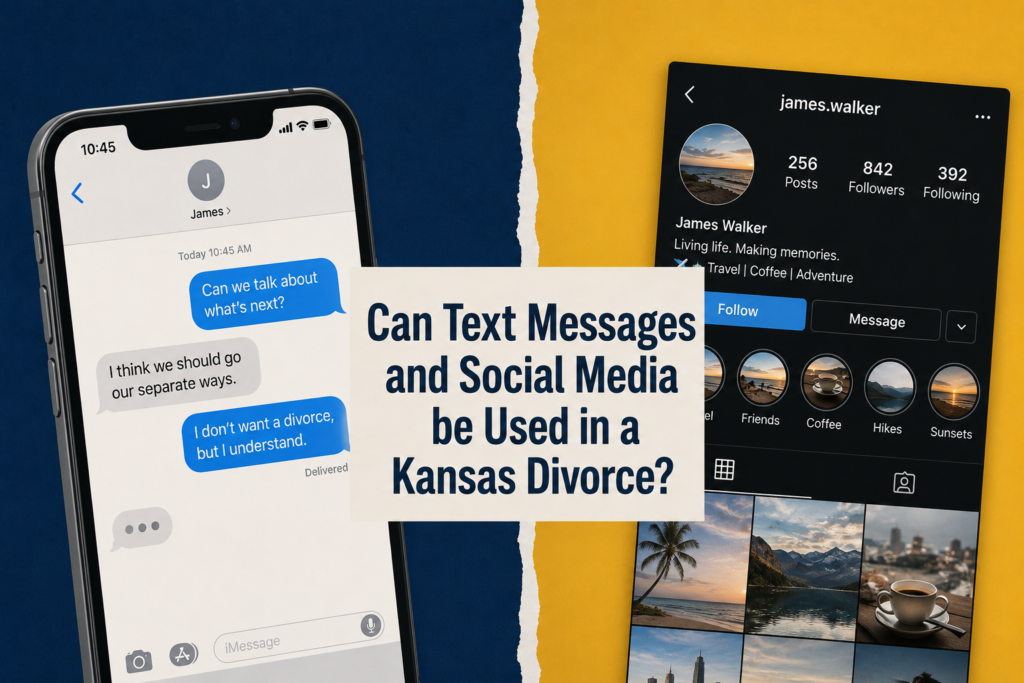
If you are going through a divorce, understanding how digital evidence works is critical. A single post made in frustration can echo through a custody case like a fire alarm in a library. Quiet at first. Impossible to ignore once triggered.
Are Text Messages Admissible in a Kansas Divorce?
In many situations, yes. Text messages can be admissible in a Leawood, Kansas divorce case if they are relevant and properly authenticated. Courts may consider texts involving parenting disputes, financial issues, threats, harassment, infidelity, or communication between spouses.
The key issue is usually not whether a text exists, but whether it can be shown to be genuine and meaningful within the broader context of the case.
The General Rule
Kansas courts generally allow relevant evidence that helps establish facts connected to the divorce or custody dispute. Text messages may be introduced to show:
- Communication between spouses
- Threats or harassment
- Admissions about finances
- Parenting behavior
- Substance abuse concerns
- Attempts to hide assets
- Violations of court orders
However, simply presenting a screenshot is not always enough. The court may require proof that:
- The message was authentic
- The correct person sent it
- The message was not altered
- The surrounding conversation supports the interpretation
Why Context Matters
A single sentence pulled from a conversation can be misleading without the messages before and after it. Courts understand that sarcasm, jokes, emotional reactions, and selective screenshots can distort reality.
For example, a message saying “Fine, take the kids” may look alarming in isolation. But if the earlier conversation involved coordinating a temporary schedule change during a work emergency, the meaning changes dramatically.
Judges often look at:
- The full conversation
- Timing of messages
- Patterns of communication
- Other supporting evidence
- Whether the message aligns with witness testimony
Digital evidence without context is like reading one page torn from the middle of a mystery novel. Important details may be missing.
When Social Media Can Hurt Your Divorce or Custody Case
Social media frequently becomes evidence in Kansas divorce and custody disputes. Posts intended for friends or followers can quickly become exhibits in court.
Even private accounts are not always truly private.
Parenting Posts
Photos or videos showing unsafe behavior around children may become relevant in custody proceedings. Posts that suggest neglect, excessive partying, substance abuse, or poor judgment may raise concerns about parenting fitness.
Examples may include:
- Leaving children unsupervised
- Dangerous stunts or reckless behavior
- Public intoxication while caring for children
- Negative comments about the other parent
Courts focus heavily on the child’s best interests. Social media content that contradicts courtroom claims about parenting can damage credibility.
Spending Posts
Financial disputes often become magnified through social media activity.
A spouse claiming financial hardship while posting luxury purchases, vacations, expensive dinners, or new vehicles may face difficult questions in court.
These posts can sometimes be used to challenge:
- Requests for support
- Claims about income
- Allegations of hidden assets
- Statements about financial need
Relationship Posts
New relationships can complicate divorce proceedings, especially in emotionally charged cases.
Posts involving romantic partners may influence:
- Custody disputes
- Co-parenting dynamics
- Claims involving dissipation of marital assets
- Allegations of infidelity
While Kansas is a no-fault divorce state, relationship-related evidence may still become relevant depending on the circumstances.
Angry or Threatening Messages
Direct messages, comments, or public posts containing threats, harassment, intimidation, or aggressive language can significantly impact a case.
Courts may take these communications seriously when evaluating:
- Protective order requests
- Co-parenting ability
- Emotional stability
- Domestic conflict concerns
Sometimes the most damaging evidence is not dramatic at all. A steady stream of hostile messages can paint a powerful picture over time.
What Types of Digital Evidence May Matter
Digital evidence extends far beyond social media posts. Modern family law cases often involve multiple forms of electronic communication and online activity.
Screenshots
Screenshots are among the most common forms of evidence in divorce cases. They may capture:
- Text conversations
- Social media posts
- Banking information
- Dating profiles
- Threatening messages
However, screenshots can sometimes be challenged if they appear incomplete or edited.
Emails
Emails may provide detailed timelines and written records regarding:
- Financial discussions
- Parenting disputes
- Agreements between spouses
- Admissions or inconsistent statements
Because emails often include timestamps and sender information, they can carry significant evidentiary value.
DMs
Direct messages on platforms like Instagram, Facebook, TikTok, Snapchat, or X may also become evidence.
These messages can reveal:
- Hidden relationships
- Harassment
- Attempts to conceal assets
- Communication patterns
Photos
Photos can sometimes establish:
- Locations
- Living conditions
- Substance use
- Spending habits
- Presence of other individuals around children
Metadata attached to digital photos may also reveal dates and locations.
Call Logs
Phone records and call logs may help establish communication patterns, frequency of contact, or interactions relevant to harassment or custody disputes.
In some cases, attorneys may subpoena phone records or other electronic records during discovery.
What NOT to Do With Digital Evidence
Digital evidence can help your case, but mishandling it can create serious legal problems.
Deleting Posts
Deleting social media posts or messages after litigation begins may create accusations of destroying evidence.
Even deleted content is not always truly gone. Courts may view intentional deletion negatively, particularly if the material was relevant to the case.
Hacking Accounts
Accessing a spouse’s private accounts without permission can expose you to legal consequences.
This includes:
- Guessing passwords
- Installing spyware
- Accessing hidden devices
- Logging into accounts without authorization
Evidence obtained illegally may be excluded and could potentially create separate legal issues.
Recording Illegally
Kansas recording laws can become complicated depending on the circumstances. Before recording phone calls, conversations, or video footage, it is important to understand what is legally permitted.
Improper recordings may:
- Be excluded from evidence
- Violate privacy laws
- Harm your credibility in court
When in doubt, speak with a family law attorney before attempting to gather evidence yourself.
How a Lawyer Can Help Use or Challenge Digital Evidence
Digital evidence can be powerful, but strategy matters just as much as the evidence itself.
Authenticity
An attorney can help establish whether evidence is authentic and admissible. This may involve:
- Verifying account ownership
- Preserving metadata
- Obtaining records through discovery
- Challenging altered or incomplete evidence
Relevance
Not every embarrassing post matters legally.
A lawyer can help determine:
- What evidence is relevant
- What may be excluded
- What could unnecessarily inflame the case
- What best supports your goals
Effective evidence is not about volume. It is about precision.
Strategy
Sometimes introducing certain evidence helps your case. Other times it may escalate conflict or distract from stronger arguments.
An experienced family law attorney can help develop a strategy that aligns with your custody, financial, and long-term objectives.
Before You Post, Pause
Digital communication has changed family law dramatically. Text messages, emails, social media posts, and screenshots can all become important evidence in a Kansas divorce or custody case.
Before posting online, deleting content, or attempting to collect evidence yourself, it is wise to understand the legal risks and opportunities involved.
Before posting, or before using screenshots in court, get legal guidance.