

Kansas courts use equitable distribution when dividing marital property. Business interests, intellectual property, royalties, trademarks, copyrights, and professional practices may be subject to division if they were acquired, created, or increased in value during the marriage. In high-asset divorce cases, courts often rely on business valuation experts and forensic accountants to determine the value of these assets and ensure a fair distribution between spouses.
When high-profile celebrities divorce, the headlines often focus on the dollar amounts involved. But beneath the celebrity news are important legal issues that can affect business owners, entrepreneurs, professionals, and high-net-worth individuals throughout Kansas.
Recent reports surrounding country music star Jelly Roll and his wife, Bunnie Xo, have raised questions about how valuable assets such as music royalties, publishing rights, trademarks, and business interests may be divided during a divorce.
While every case is unique, The Bright Family Law Center can help Kansas couples understand several important issues to consider when significant assets are involved.
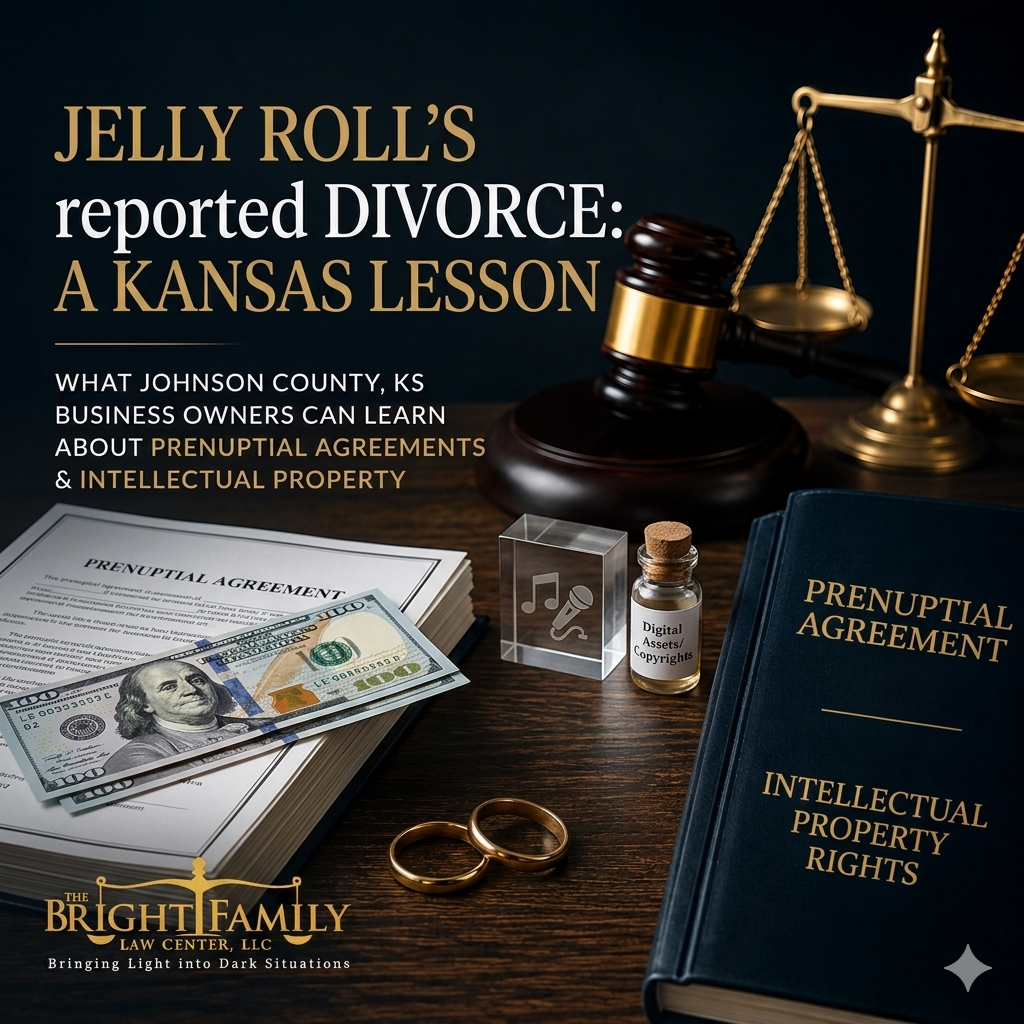
Can Intellectual Property Be Divided in a Kansas Divorce?
Many people think of marital property as homes, bank accounts, and retirement funds. However, intellectual property can also have substantial value.
Examples of intellectual property that may be relevant in a Kansas divorce include:
- Business trademarks
- Copyrights
- Patents
- Music royalties
- Publishing rights
- Brand licensing agreements
- Online businesses and digital assets
If these assets were created, developed, or increased in value during the marriage, they may become part of the property division process.
What Happens to a Business That Grows During Marriage?
Kansas follows the principle of equitable distribution. This means marital assets are divided in a fair, just and equitable manner, though not necessarily equally.
For business owners, one of the most complex questions is determining how much of a business’s value is subject to division.
Even when a business was started before marriage, any increase in value during the marriage may become a point of dispute. Courts may consider factors such as:
- Contributions made by either spouse
- Efforts that helped grow the business
- Financial investments during the marriage
- The overall increase in business value
In high-net-worth divorces, valuation experts are often brought in to determine the true value of a business or income-producing asset.
Why Prenuptial Agreements Matter
Celebrity divorce stories often spark discussion about whether a prenuptial agreement exists and what protections it provides.
A properly drafted prenuptial agreement can help couples:
- Define separate property before marriage
- Protect business ownership interests
- Address future appreciation of assets
- Clarify how income and investments will be treated
- Reduce uncertainty and litigation during divorce
For physicians, attorneys, executives, entrepreneurs, and business owners in Kansas, a prenuptial agreement can provide valuable protection for assets accumulated before and during marriage.
High-Asset Divorce Cases Often Require Financial Experts
When significant wealth is involved, divorce becomes more than a legal matter. It often requires a team of professionals to analyze complex financial issues.
Experts may be needed to evaluate:
- Closely held businesses
- Executive compensation packages
- Investment portfolios
- Retirement accounts
- Intellectual property rights
- Royalty and licensing income
Accurate valuation is often critical to achieving a fair outcome.

Protecting Your Assets in a Kansas Divorce
Whether you own a business, hold valuable intellectual property, or have substantial investments, understanding your rights before a divorce becomes necessary can make a significant difference.
High-net-worth divorces frequently involve issues that extend far beyond traditional property division. Planning ahead with proper legal guidance and estate planning tools can help protect both your financial future and your business interests.
If you are considering a prenuptial agreement or facing a high-asset divorce in Overland Park, Johnson County, or the greater Kansas City area, speaking with an experienced Kansas family law attorney can help you understand your options and protect what you have built.
Contact The Bright Family Law Center today.
Frequently Asked Questions About Business Assets and Intellectual Property in a Kansas Divorce
Are business assets divided in a Kansas divorce?
Potentially. Kansas courts use equitable distribution, meaning marital assets are divided in a fair, just and equitable manner based on the circumstances of the case. If a business was started or grew in value during the marriage, some or all of that value may be considered marital property.
Can intellectual property be considered marital property?
Yes. Intellectual property such as trademarks, copyrights, patents, publishing rights, royalties, and licensing agreements may be subject to division if they were created, acquired, or increased in value during the marriage.
What if I owned my business before getting married?
Owning a business before marriage does not automatically exclude it from divorce proceedings. While the original ownership interest may remain separate property, any appreciation in value during the marriage could become a point of dispute.
How do Kansas courts determine the value of a business?
Business valuation experts are often hired to analyze financial records, revenue, assets, liabilities, goodwill, and future earning potential. The valuation helps the court determine what portion of the business may be subject to division.
Can a spouse claim part of future royalties or licensing income?
In some situations, yes. If the underlying intellectual property was developed during the marriage, future income generated by those assets may be considered when dividing marital property.
How can a prenuptial agreement protect a business owner?
A prenuptial agreement can establish what assets remain separate property, address future business growth, protect ownership interests, and reduce uncertainty if a divorce occurs.
Do I need a forensic accountant in a high-asset divorce?
Many high-net-worth divorces benefit from forensic accountants, particularly when business ownership, executive compensation, stock options, hidden income, or complex financial holdings are involved.